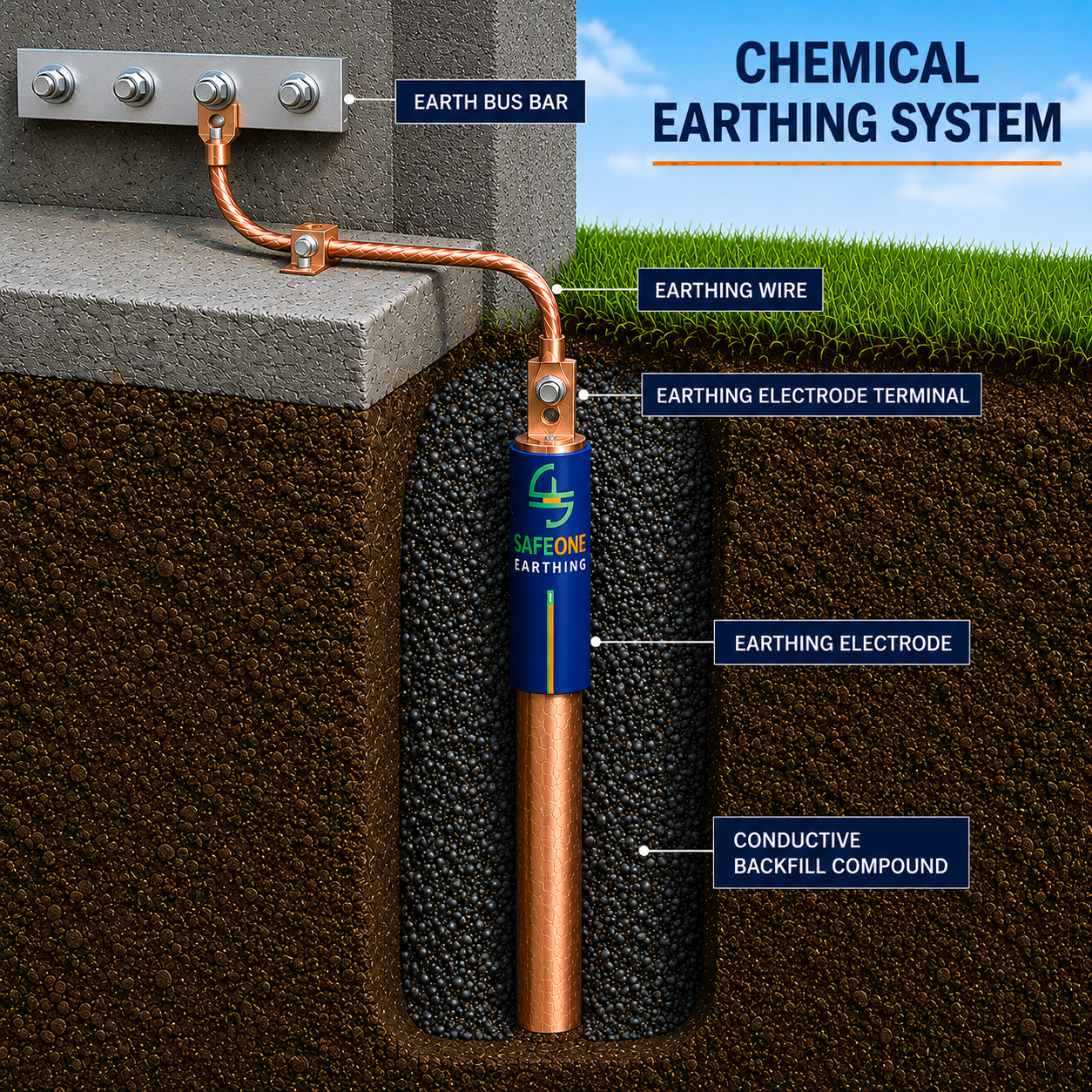


Earth Pit Testing: Importance, Procedure, Standards & Benefits
Earth Pit Testing: Ensuring Electrical Safety and Reliable Earthing Systems
An effective earthing system is the foundation of every safe electrical installation. Over time, factors such as soil moisture, corrosion, environmental conditions, and construction activities can increase earth resistance, reducing the effectiveness of the earthing system.
Earth Pit Testing is a critical preventive maintenance activity that measures the earth resistance of an earthing system and ensures compliance with electrical safety standards. Regular testing helps maintain system reliability, protects electrical equipment, and safeguards personnel from electrical hazards.
What is Earth Pit Testing?
Earth Pit Testing is the process of measuring the resistance between an earth electrode and the surrounding soil using a calibrated. Earth Resistance Tester. The objective is to ensure that the earthing system provides a safe, low-resistance path for electrical fault currents and lightning surges to dissipate into the ground.
Routine Earth Pit Testing helps maintain the effectiveness of the earthing system and supports compliance with industry standards.
Why is earth pit testing so important?
Regular Earth Pit Testing provides adequate protection for:
-
Human Safety
-
Electrical Equipment
-
Transformers
-
DG Sets
-
Electrical Panels
-
UPS Systems
-
Lightning Protection Systems
-
Protection against Electric Shock
-
Prevention of Equipment Damage
-
Proper Operation of Protective Devices
-
Fire Risk Reduction
-
Lightning Protection Reliability
-
Reduced Production Downtime
Routine testing helps identify earthing problems before they become dangerous or lead to costly equipment failures.
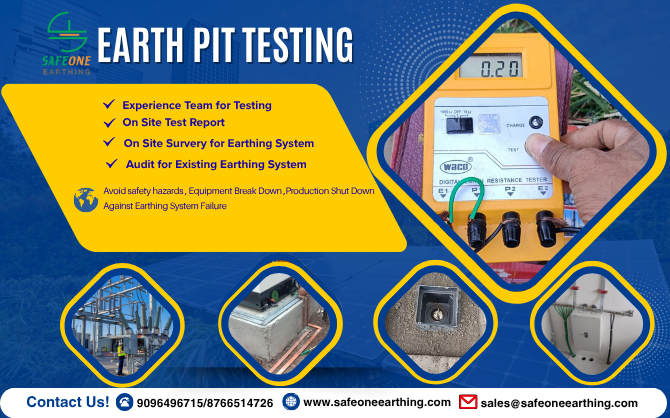
Earth Pit Testing Procedure
Safeone Earthing LLP USES industry-standard testing methods with calibrated digital Earth Resistance Testers to ensure accurate and reliable results.
1. Site Inspection-
Inspect the earth pit chamber.
-
Check earth strips and electrode connections.
-
Verify accessibility of the earth pit.
2. Instrument Setup-
Connect the Earth Resistance Tester.
-
Install auxiliary test spikes at the specified distances.
-
Verify proper instrument connections.
3. Earth Resistance Testing-
Measure earth resistance using the Three-Point (Fall of Potential) Method.
-
Record stable readings displayed on the instrument.
4. Result Analysis-
Compare measured values with applicable standards.
-
Identify damaged earthing systems or excessive earth resistance.
5. Test Reporting
Provide a detailed testing report including:-
Earth Resistance Values
-
Test Location
-
Instrument Details
-
Calibration Information
-
Recommendations
-
Compliance Status
Methods of Earth Pit Testing
Three-Point (Fall of Potential) Method
The Three-Point Method is the most widely accepted and accurate technique for measuring earth resistance.
Advantages-
High Accuracy
-
Industry Standard Method
-
Recommended by IS 3043
-
Suitable for Most Earthing Systems
Clamp-On Earth Testing
Clamp-On Earth Testing is used where disconnecting the earthing system is not practical.
Benefits-
No Power Shutdown Required
-
Quick Testing
-
Suitable for Multiple Grounding Systems
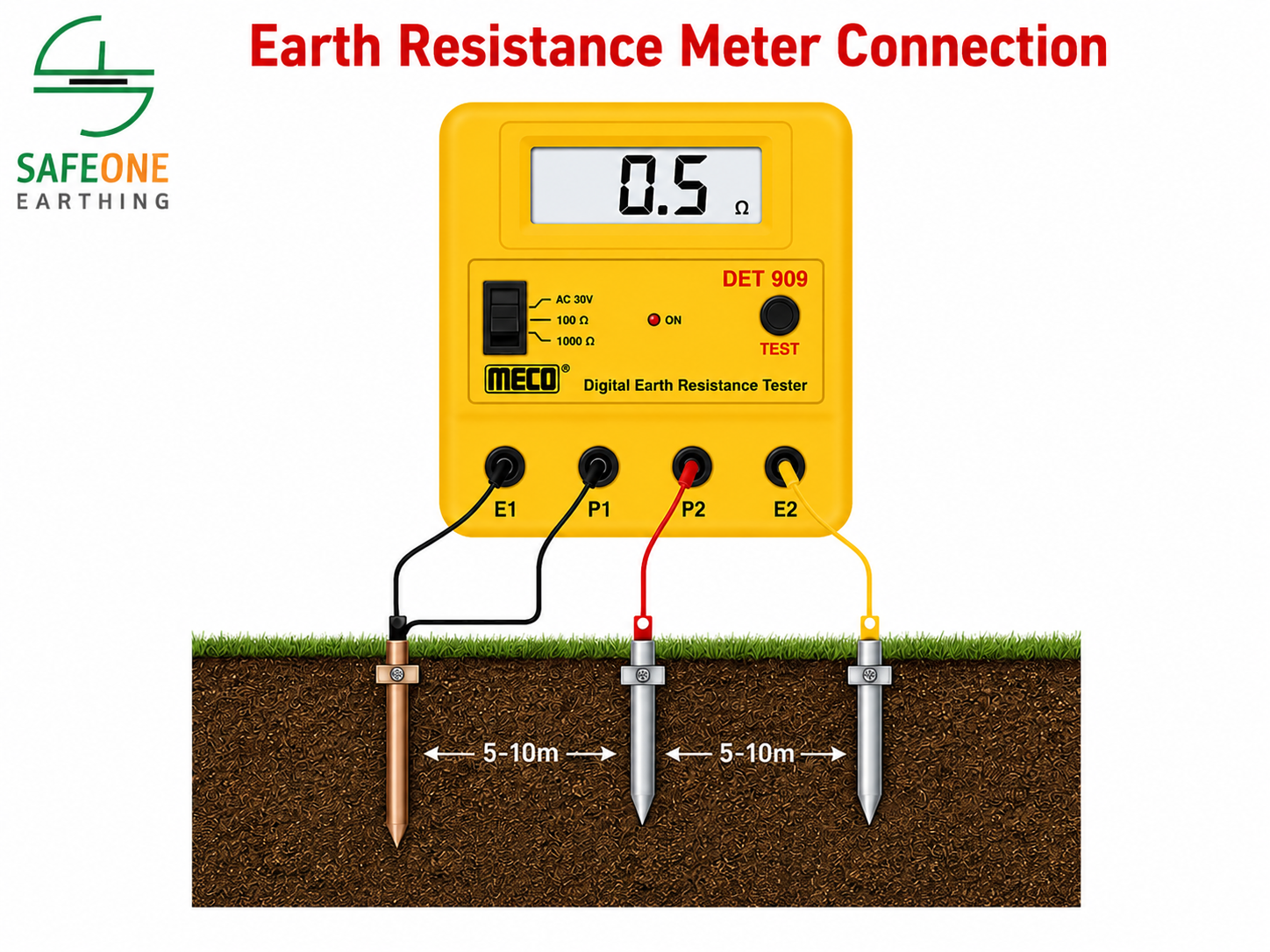
Steps for Testing an Earthing Electrode
Step 1 – Preparation
Disconnect the earth electrode under test from the existing grounding system to isolate it.
Step 2 – Spike Placement
Place two auxiliary spikes approximately 10 metres apart ensuring the testing rod is positioned at the recommended distance from the first spike.
Step 3 – Testing
Press the Test Button on the Earth Resistance Tester and record the stable reading displayed on the instrument.
At Safeone Earthing LLP, we provide professional Earth Pit Testing Services for:
-
Industrial Plants
-
Commercial Buildings
-
Electrical Substations
-
Hospitals
-
Data Centers
-
Telecom Towers
-
Residential Complexes
-
Manufacturing Facilities
-
Infrastructure Projects
Recommended Earth Resistance Values
Installation Recommended Resistance Residential Buildings UPTO 5 Ω Commercial Buildings UPTO 5 Ω Industrial Plants UPTO 1 Ω DG Sets UPTO 3 Ω Transformers UPTO 1 Ω Data Centers UPTO 1 Ω Lightning Arresters UPTO 10 Ω
| Installation | Recommended Resistance |
|---|---|
| Residential Buildings | UPTO 5 Ω |
| Commercial Buildings | UPTO 5 Ω |
| Industrial Plants | UPTO 1 Ω |
| DG Sets | UPTO 3 Ω |
| Transformers | UPTO 1 Ω |
| Data Centers | UPTO 1 Ω |
| Lightning Arresters | UPTO 10 Ω |